You’re experiencing one of life’s most remarkable transformations—growing a human being inside your body. And it’s supposed to be one of the most beautiful experiences of your life. Yet if you’re experiencing pelvic girdle pain, you might be struggling, frustrated, and wondering if nine months of discomfort are inevitable.
Here’s the truth: pelvic girdle pain is common—affecting approximately one in three pregnant women—but it’s absolutely manageable with the right strategies. You don’t have to suffer through pregnancy. With evidence-based approaches tailored to your situation, most women experience significant pain relief and can enjoy their pregnancy.
At Nuvo Physio in Montreal, we work with many pregnant women dealing with pelvic girdle pain, and we’re passionate about helping women achieve comfortable, empowering pregnancies. In this guide, I’ll explain what pelvic girdle pain is, why it happens during pregnancy, and—most importantly—what you can do about it.
What is Pelvic Girdle Pain?
Pelvic girdle pain (PGP)—sometimes called symphysis pubis dysfunction (SPD) or pubic bone pain—is discomfort in the pelvic region that develops or worsens during pregnancy. It affects the joints connecting your pelvic bones: the sacroiliac joints (where your sacrum connects to your pelvis) and the symphysis pubis (where your pubic bones connect).
Key characteristics of pelvic girdle pain:
- Pain in the front of the pelvis (symphysis pubis), sides/buttocks (sacroiliac joints), or both
- Pain that typically worsens with activity (walking, climbing stairs, rolling in bed, getting out of a chair)
- Pain that may improve with rest but doesn’t fully resolve
- Pain that develops in pregnancy, not before
- Often accompanied by instability or feeling like your pelvis might “give out”
Pain location and intensity vary widely:
- Some women experience mild discomfort easily managed with activity modification
- Others experience severe pain limiting daily function and mobility
- Pain may appear early in pregnancy or suddenly later
- Pain may affect one side or be symmetric
Why Does Pelvic Girdle Pain Develop During Pregnancy?
Understanding the “why” helps you understand management strategies. Several mechanisms contribute to pelvic girdle pain during pregnancy.
Hormonal Changes
The primary culprit is the hormone relaxin, which skyrockets during pregnancy:
Relaxin’s role: Relaxin softens connective tissue throughout your body to prepare you for birth. This is actually helpful when it comes to labor, but it comes with consequences for pelvic stability during pregnancy.
- Ligament laxity: Ligaments supporting your pelvic joints become more elastic and less taut
- Increased joint mobility: Your sacroiliac and symphysis pubis joints move more than they normally would
- Reduced stability: Without stable ligaments, your muscles must work harder to stabilize your pelvis
- Muscle fatigue: Your pelvic floor, hip, and core muscles work overtime trying to compensate for ligamentous laxity
Mechanical and Postural Changes
As your baby grows, your center of gravity shifts:
- Increased spinal curve (lordosis): The curve in your lower back increases to accommodate your growing belly
- Anterior pelvic tilt: Your pelvis tilts forward
- Postural compensation: Your whole spine adjusts to balance your changing shape
- Weight distribution: Increased weight on one or both sides can stress pelvic joints
- Muscle imbalances: Some muscles strengthen while others lengthen and weaken, creating imbalance
Muscle and Pelvic Floor Changes
Pregnancy affects your muscles:
- Pelvic floor weakness: Hormonal effects and increasing weight weaken pelvic floor muscles
- Core muscle changes: Abdominal muscles stretch and weaken
- Muscle imbalances: Hip and pelvic stabilizer muscles may weaken or tighten unevenly
- Loss of stability: Weakened muscles can’t effectively stabilize pelvic joints
- Referred pain: Tense hip muscles can refer pain to the pelvic region
Previous Injury or Dysfunction
Women with prior pelvic, hip, or lower back issues are at higher risk:
- Previous pelvic or hip injuries
- History of low back pain
- Pelvic joint hypermobility
- Prior pelvic trauma or imbalance
When Does Pelvic Girdle Pain Appear?
Timing varies:
- Some women notice onset in the first trimester (surprising, since the belly isn’t large yet—hormonal changes are the culprit)
- Many women develop pain in the second or third trimester when postural changes intensify
- Some experience worsening over time; others notice pain appear suddenly
- Pain may vary throughout pregnancy—better some days, worse others
Evidence-Based Management Strategies for Pelvic Girdle Pain
The good news: pelvic girdle pain is highly manageable. A comprehensive approach addressing mechanical, muscular, and hormonal factors works best.
1. Pelvic Support Garments
One of the most immediately helpful interventions is pelvic support:
Pelvic support belts (like Prenatal Cradle, SIJ Belt, or similar):
- Provide external support mimicking ligament stability
- Reduce pain by limiting excessive pelvic joint motion
- Are worn around the hips, just below the belly
- Provide relief often within days
- Should be snug but not uncomfortably tight
How they work: These belts manually stabilize your pelvic joints, reducing stress on tissues and allowing muscles to relax rather than work constantly for stability.
Usage tips:
- Wear during activities that provoke pain
- Can be worn all day if needed (usually removed for sleep)
- Should be fitted properly—get guidance from your physiotherapist
- Most effective when combined with exercises and activity modification
Many women find a support belt transformative—suddenly activities (walking, stair climbing, getting out of bed) become manageable.
2. Posture Awareness and Modification
Your posture dramatically impacts pelvic girdle pain:
Harmful postures to avoid:
- Sitting with your weight on one side: Creates asymmetrical loading on pelvic joints
- Slouching: Increases spinal curve and anterior pelvic tilt
- Legs crossed: Stresses sacroiliac joints
- Sleeping on your side without support: Allows top leg to pull on pelvic joints
Beneficial postures to embrace:
- Neutral pelvis standing: Distribute weight evenly on both feet; avoid excessive anterior tilt
- Supported sitting: Use a firm chair with back support; avoid sinking into soft couches
- Side-lying with pillow support: Place a pillow between knees and under growing belly
- Bilateral weight bearing: When sitting, support both hips equally
Simple postural awareness often provides significant relief.
3. Pelvic Floor Muscle Training
Specialized pelvic floor training supports pelvic stability during pregnancy:
Assessment first: A pelvic health physiotherapist should assess your specific muscle status—are muscles weak, tense, or uncoordinated? This determines the exercise approach.
For most pregnant women with PGP:
- Strengthening exercises: Building endurance and strength in pelvic floor and core muscles
- Muscle coordination training: Ensuring muscles contract and relax appropriately
- Functional integration: Training muscles to work with breathing and movement
Specific exercises (guided by your physiotherapist):
- Pelvic floor contractions: Sustained holds (5-10 seconds) and quick pulses (1-second on/off)
- Core stability exercises: Adapted for pregnancy (modified planks, side-lying leg lifts, bridges)
- Hip stabilizer training: Clamshells, side-lying hip abduction, lateral band walks
- Breathing integration: Connecting pelvic floor function with diaphragmatic breathing
Learn more about pelvic floor preparation for birth, which includes detailed exercise guidance.
4. Activity Modification
Many women with pelvic girdle pain can continue activity—with modifications:
Movements to modify or avoid:
- Stair climbing: Use a rail, take one step at a time (don’t alternate), or climb slowly with intentional muscle engagement
- Walking: Reduce distance or frequency; use a support belt; break activity into shorter intervals
- Rolling in bed: Move slowly; support yourself with hands and arms; keep hips aligned
- Getting out of a chair: Scoot to the front of the chair, push up with arms, stand without twisting
- Sitting: Use firm support; avoid crossing legs; change position frequently
- Bending and lifting: Avoid bending from the waist; squat or use a stool; don’t twist while lifting
Modifications that help:
- Slower movement: Rushing increases pain
- Deliberate stability engagement: Intentionally engage core and pelvic floor before activities
- Weight distribution: Maintain equal weight on both legs
- Frequent position changes: Don’t stay in one position too long
- Adequate rest: Pain is a signal to ease up; listen to your body
5. Exercise for Pelvic Girdle Pain Relief
Specific exercises address pelvic girdle pain:
Hip stabilizer exercises (Glute medius, tensor fasciae latae, gluteus maximus):
- Side-lying hip abduction: Lie on your side, lift top leg without rolling backward
- Clamshells: Lie on your side, knees bent, open top knee like an oyster shell
- Lateral band walks: Place resistance band around thighs, walk sideways with slight knee bend
- Single-leg stance: Stand on one leg, maintain pelvic stability, repeat on other side
Core stability exercises (modified for pregnancy):
- Modified planks: Hand or forearm plank, held for 20-30 seconds (avoid traditional planks as belly grows)
- Side plank: Hold for 20-30 seconds, focusing on hip stability
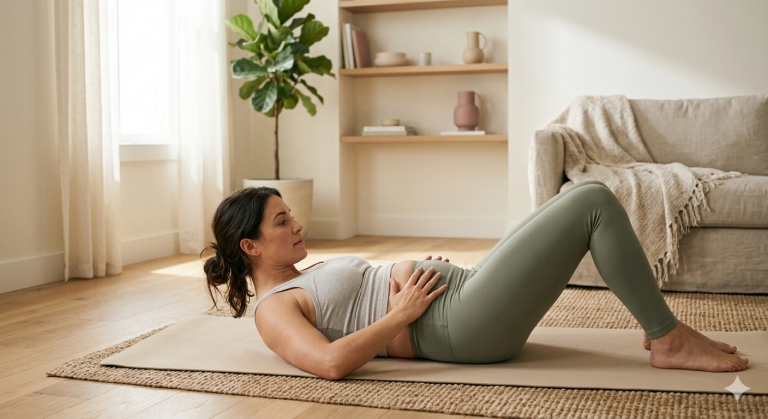
- Bridges: Lie on back, feet flat, lift hips, focusing on glute and pelvic floor engagement
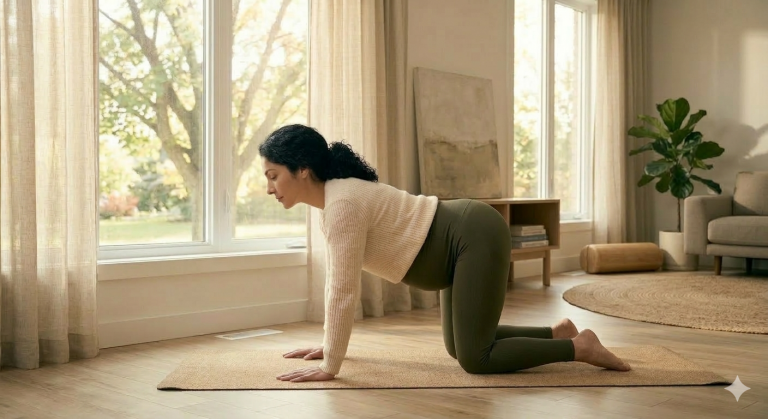
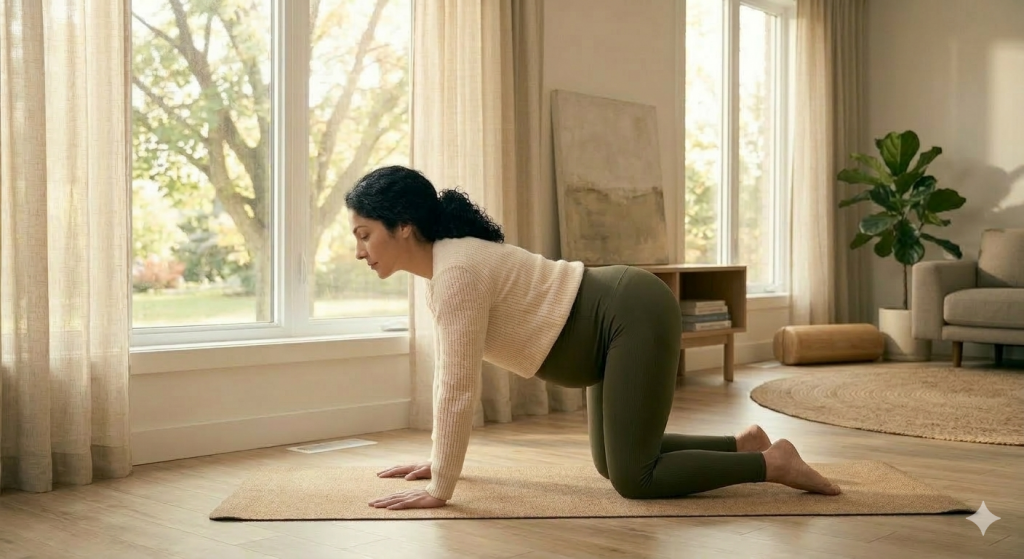
- Quadruped exercises: On hands and knees, raise opposite arm and leg
Stretching and flexibility:
- Hip flexor stretches: Tight hip flexors increase anterior pelvic tilt
- Piriformis stretches: Reduces sciatic nerve irritation and hip tension
- Lower back stretches: Child’s pose, cat-cow stretches
- Pectoral stretches: Opens your chest, improving posture
Important: Exercises should reduce, not increase, pain. Modify or stop exercises that worsen pain.
6. Pain Management Techniques
Several techniques reduce pain and improve comfort:
Heat therapy:
- Warm showers or heating pads provide temporary relief
- Use for 15-20 minutes at a time
- Effective for muscle tension and pain
Ice therapy:
- Ice applied to the area can reduce inflammation
- Use for 10-15 minutes if there’s acute swelling
- Less commonly needed but helpful for some
Manual therapy:
- Massage from a trained therapist can relieve muscle tension
- Gentle soft tissue work around hips, lower back, and pelvic area
- Often combined with stretching
Positioning and rest:
- Lie down with knees bent and supported by pillows
- Use a pregnancy pillow for support
- Limit positions that provoke pain
- Regular rest breaks prevent pain escalation
7. Sleep Optimization
Pain often worsens at night. Sleep positioning helps:
Best sleeping position for PGP:
- Left side: Most commonly recommended to support circulation and reduce pressure on round ligaments
- Support between knees: Pillow between knees prevents hip dropping and pelvic rotation
- Support under belly: Pregnancy pillow supporting growing belly
- Pillow behind back: Prevents rolling onto your back
Getting in and out of bed:
- Roll slowly; support yourself
- Lower legs out of bed before pushing yourself up
- Avoid twisting
When to Seek Professional Help
While many women manage pelvic girdle pain with self-help strategies, professional guidance accelerates improvement:
Work with a pelvic health physiotherapist if:
- Pain is moderate to severe or limiting daily function
- You’re unsure which exercises are safe during pregnancy
- You need personalized guidance on postural correction
- You want to optimize pregnancy experience and prepare for birth
- Pain isn’t improving after 2-4 weeks of self-management
A specialized physiotherapist can:
- Provide comprehensive assessment
- Identify your specific muscle and mechanical issues
- Create a personalized exercise program
- Monitor progress and adjust treatment
- Prepare you optimally for birth
The Connection to Birth Preparation
Pelvic girdle pain management during pregnancy naturally ties to birth preparation. Preparing your pelvic floor for birth includes exercises and strategies that also help manage pelvic girdle pain. A comprehensive approach addresses current pain management while preparing for successful labor and birth.
Postpartum Recovery After Pelvic Girdle Pain
Pelvic girdle pain typically improves within weeks to months postpartum as relaxin decreases and ligaments tighten. However, some women experience ongoing symptoms.
Supporting postpartum pelvic health:
- Continue gentle exercises postpartum
- Resume pelvic floor training with guidance
- Continue using support belt if needed while tissues tighten
- Gradually return to activity as pain permits
- Work with a physiotherapist if pain persists beyond 3 months postpartum
Learn about postpartum recovery in the fourth trimester.
A Message About Your Pregnancy
Pelvic girdle pain is real, and your discomfort is valid. It’s not something you have to “just tough out” during pregnancy. With appropriate support, exercise, and management, most women experience significant pain relief and can enjoy their pregnancy more fully.
Your body is doing something remarkable. You deserve support in making that experience as comfortable and empowering as possible.
Frequently Asked Questions
Can pelvic girdle pain harm my baby?
No. Pelvic girdle pain affects your pelvic joints and muscles, not your baby. It’s uncomfortable for you but doesn’t harm fetal development or growth. However, the pain and reduced mobility can affect your overall well-being, which is why managing it is important.
Will pelvic girdle pain improve after birth?
Most women experience significant improvement within weeks postpartum as hormone levels normalize and ligaments tighten. Some women have continued symptoms for months or longer. Early intervention during pregnancy often prevents prolonged postpartum pain. Starting postpartum rehabilitation promptly supports optimal recovery.
Can I exercise during pregnancy if I have pelvic girdle pain?
Yes, but with modifications. Your specific exercise plan depends on your pain level and what triggers it. Most women benefit from specific strengthening exercises targeting hip stabilizers, core muscles, and pelvic floor. High-impact exercise (running, jumping) may need modification or replacement with lower-impact options (walking, swimming, cycling). Work with a physiotherapist to tailor exercise for your situation.
Should I use a pelvic support belt throughout pregnancy?
This varies by individual preference and pain level. Some women wear a belt continuously during pregnancy; others wear it only during activities that provoke pain. Some wear it primarily when walking or doing activities. Work with your physiotherapist to determine what works best for you. Most women can gradually reduce belt use as muscles strengthen and pain improves.
Is pelvic girdle pain a sign of weakness or something I did wrong?
Absolutely not. Pelvic girdle pain results from hormonal changes, mechanical shifts, and normal pregnancy adaptations—not weakness or wrongdoing. Many strong, active women experience pelvic girdle pain during pregnancy. It’s a common, treatable condition, not a reflection on you or your fitness level.
How will pelvic girdle pain affect my labor and birth?
Pelvic girdle pain doesn’t usually prevent vaginal birth. However, managing pain during pregnancy helps you prepare optimally for labor. Some labor positions may be uncomfortable if you have PGP; your physiotherapist can discuss comfortable positioning. Pain management strategies learned during pregnancy apply to labor management as well.
Start Your Comfortable Pregnancy Journey
You deserve to enjoy pregnancy—to feel your baby move, to rest comfortably at night, to walk without pain. Pelvic girdle pain doesn’t have to be an inevitable part of your experience.
At Nuvo Physio in Montreal, we specialize in supporting pregnant women with pelvic girdle pain. We’ll assess your specific situation, create a personalized management plan, and support you throughout your pregnancy. We understand the unique needs of pregnant bodies and are passionate about helping you have the most comfortable, empowering pregnancy possible.
Whether you’re in early pregnancy and want to prevent problems, or you’re currently struggling with significant pain, we’re here to help.
Book your pregnancy consultation today and let’s work together toward a more comfortable pregnancy and optimal birth preparation.