Bowel Dysfunction & Constipation
Evidence-based pelvic floor physiotherapy to address constipation, incomplete evacuation, and pelvic floor dyssynergia — helping you regain comfortable, efficient bowel function.

You’re not imagining this. What you’re experiencing is real.

Why bowel dysfunction and constipation can feel overwhelming
Understanding the physical and emotional impact of chronic bowel difficulties on daily life
Chronic constipation and bowel dysfunction are isolating experiences that many people in Montreal live with in silence. The strain, the incomplete feeling, the hours spent on the toilet, the discomfort that lingers — these can affect every part of your life, from your energy and mood to your ability to work or socialize. You may have tried countless laxatives, dietary changes, and supplements, only to find that the problem returns once you stop. The physical strain itself can trigger pelvic pain, and the emotional toll of not being able to control your own body can be significant.
Many people assume that chronic constipation is purely a digestive problem, something that only a gastroenterologist can address. But for many people, bowel dysfunction is actually a pelvic floor problem — a coordination issue between your bowel, pelvic floor muscles, and nervous system. Pelvic floor physiotherapy is a recognized, evidence-based treatment for constipation and bowel dysfunction related to pelvic floor dyssynergia and straining patterns. Whether your constipation started recently or has been a lifelong struggle, physiotherapy can help you achieve more comfortable, efficient bowel function and break the cycle of straining and incomplete evacuation.
How bowel dysfunction affects the pelvic floor
How defecation mechanics, pelvic floor coordination, and intra-abdominal pressure interact
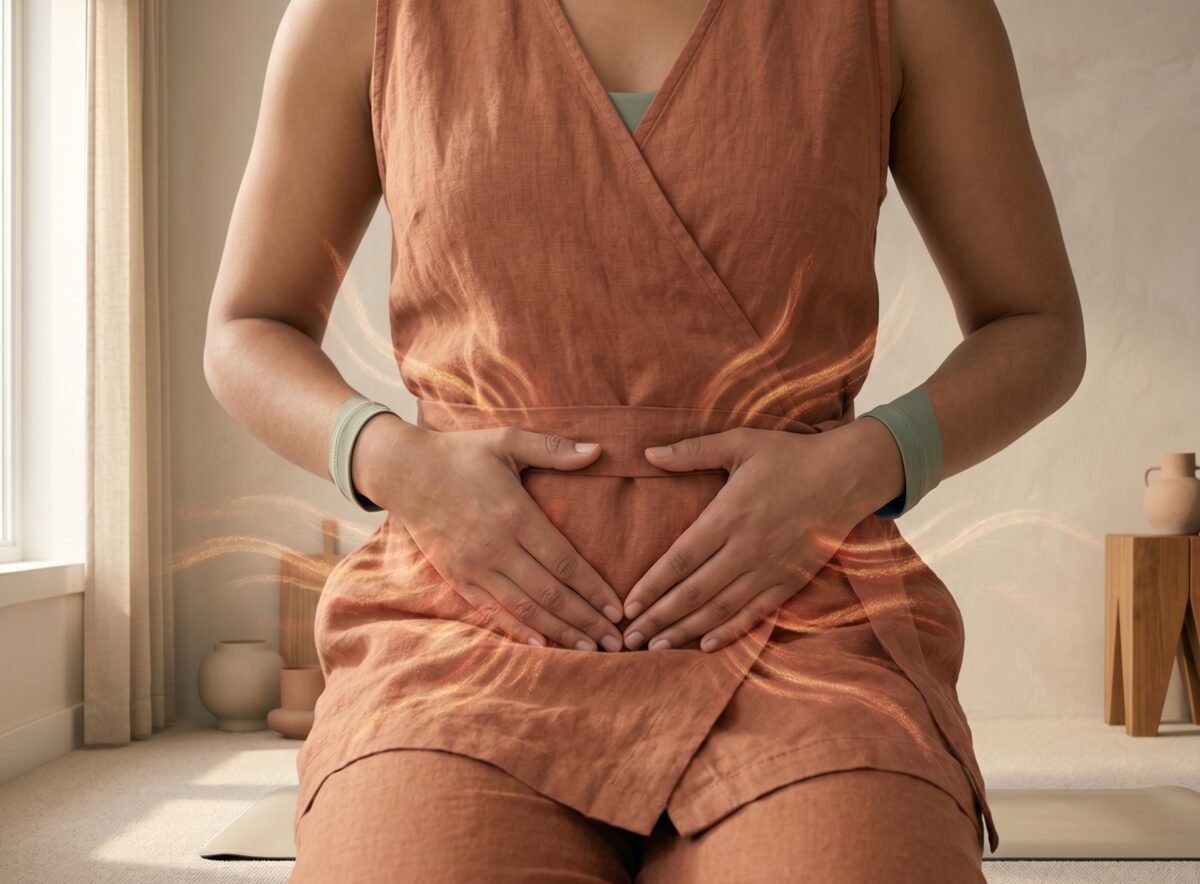
Normal bowel function requires precise coordination between multiple systems: your intestinal muscles, your pelvic floor, your abdominal muscles, and your nervous system. During defecation, the pelvic floor should relax and lengthen to open the anorectal angle, allowing stool to pass efficiently. At the same time, your abdominal muscles contract to increase intra-abdominal pressure, supporting the passage of stool. But when this system is dyscoordinated — when your pelvic floor tightens instead of relaxing, or when you strain excessively against a pelvic floor that isn’t fully relaxed — you develop pelvic floor dyssynergia.
Pelvic floor dyssynergia is a vicious cycle: straining creates more tension in the pelvic floor, the tension prevents relaxation, the pelvic floor can’t open fully, stool evacuation becomes incomplete, you strain harder to compensate, and the tension increases further. Over time, chronic straining can damage pelvic floor muscle function, pelvic nerves, and sensitive tissues in the rectal and anal area. Other contributors to bowel dysfunction include weak abdominal muscles, altered toileting habits, dehydration, and nervous system hypersensitivity that amplifies pain with defecation. Physiotherapy addresses all these factors by retraining pelvic floor relaxation and coordination, optimizing straining mechanics, and restoring efficient bowel function.
Why physiotherapy can help with bowel dysfunction
Physiotherapy addresses the muscular coordination and biomechanical factors that drive constipation and bowel dysfunction — factors that diet and medication alone cannot fix. By retraining pelvic floor relaxation, improving defecation mechanics, and addressing straining patterns, physiotherapy helps you achieve lasting improvement in bowel function. Here’s how pelvic floor physiotherapy supports your recovery.
Pelvic floor physiotherapy focuses on:
- Pelvic floor relaxation and coordination training — Teaching your pelvic floor to relax and lengthen appropriately during defecation, restoring the coordination between your pelvic floor relaxation and abdominal pressure that allows efficient stool passage.
- Straining mechanics optimization — Correcting ineffective or excessive straining patterns, teaching you how to generate appropriate abdominal pressure while maintaining pelvic floor relaxation, and eliminating the dyssynergia that creates blocked or incomplete evacuation.
- Biofeedback training — Using real-time feedback to help you understand and correct your pelvic floor and abdominal muscle patterns during simulated defecation, building awareness of the coordination you need for efficient bowel function.
- Bowel habit modification and toileting mechanics — Addressing constipating habits like prolonged sitting, ignoring urges, inadequate fluid intake, and straining patterns; teaching effective toileting positions and timing to support regular, comfortable bowel movements.

How bowel dysfunction care works at Nuvo Physio
Condition-first care that evolves with you.
Care starts with understanding your specific bowel pattern — whether your symptoms are constipation with straining, incomplete evacuation, fecal urgency, or post-surgical bowel changes — and how these are affecting your daily life and comfort. We assess your pelvic floor relaxation ability, abdominal muscle function, toileting mechanics, and nervous system sensitivity. Then we build a plan that targets the specific factors driving your symptoms, whether that’s pelvic floor dyssynergia, weak abdominal support, or habitual straining.
Your care may involve:
- Specialized Pelvic Physiotherapy — Evidence-based bowel dysfunction management including pelvic floor relaxation training, defecation mechanics optimization, biofeedback-guided coordination retraining, and straining pattern correction for constipation, incomplete evacuation, dyssynergia, and post-surgical bowel changes.
- Collaborative Team Care — At Nuvo, we don’t just assign a therapist; we assign a team. We match you with the most appropriate clinician(s) based on your current phase of care — whether you need acute bowel symptom management or long-term coordination retraining — to ensure the best fit for your recovery.
- Education and Guidance — Tools and support to manage symptoms between visits, including home exercise programs for pelvic floor relaxation, toileting mechanics training, bowel habit modification strategies, fluid and fiber management guidance, and pain management techniques.
- Long-term support — Sustainable improvement, not just quick fixes. We adjust the care team as your needs evolve from acute symptom management to long-term bowel health maintenance, efficient defecation, and comfortable pelvic floor function.
Common bowel dysfunction symptoms we support
Bowel dysfunction presents differently depending on underlying causes — pelvic floor dyssynergia, weak abdominal support, IBS, post-surgical changes, or nervous system sensitivity. We provide specialized care for the full range of bowel-related symptoms. If you recognize yourself in any of these, we can help.
- Chronic constipation with straining — Infrequent bowel movements requiring excessive pushing, strain, or prolonged time on the toilet without adequate results.
- Incomplete evacuation sensation — Feeling like you haven’t fully emptied your bowel, even after straining or multiple attempts, leading to repeated bowel urges.
- Bowel urgency and frequency — Sudden, compelling urges to defecate, or frequent bowel movements disrupting daily activities (often related to IBS or nervous system sensitivity).
- Pain or discomfort with defecation — Sharp, burning, or aching pain in the rectum, anus, or pelvic area during or after bowel movements, sometimes related to muscle tension or tissue sensitivity.
- Pelvic floor tension contributing to bowel symptoms — Chronic pelvic floor muscle tightness that restricts relaxation during defecation and amplifies pain with bowel movements.
- Post-surgical bowel changes — New or worsening constipation, incomplete evacuation, or bowel urgency following hysterectomy, cesarean, or other abdominal or pelvic surgery.
- Bowel-related pelvic pain and bloating — Abdominal distension, visceral pain, or pelvic heaviness related to constipation or post-defecation discomfort affecting comfort and posture.
What to expect when you start care
- “Tell us what you’re feeling” — Answer guided questions about your bowel pattern, straining, incomplete evacuation, pain, and how constipation or bowel dysfunction is affecting your daily life and confidence.
- “Get the right support” — We use your answers to guide the next steps and match you with the clinician best suited to your specific bowel pattern, pelvic floor needs, and management goals.
- “Begin care at your pace” — Treatment is shaped around your comfort and goals. Whether your symptoms are mild or severe, recent or long-standing, we meet you where you are and progress at your pace.